
6 French Press Coffee Makers for Rich, Full Bodied Flavor at Home
Find the best french press coffee makers for 2026. We reviewed the Espro P7 Bodum Chambord Stanley and Le Creuset to help you brew a better cup every day.
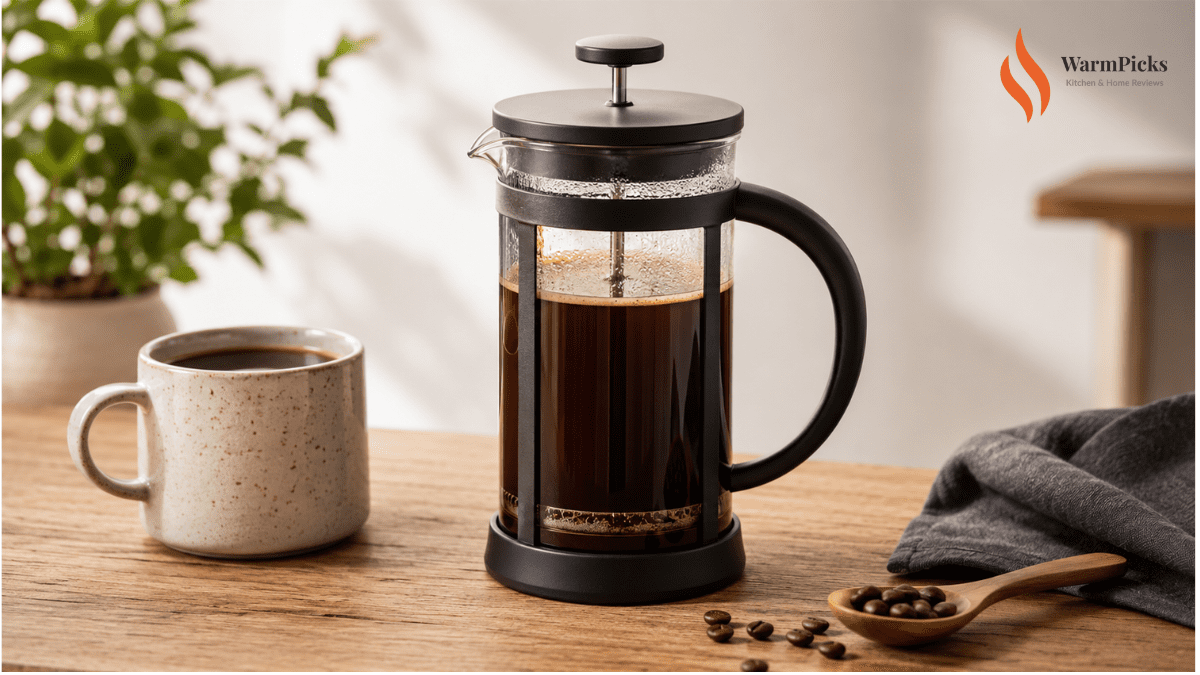
The Espro P7 French Press is our top pick for most buyers in 2026. Its double micro-filter system eliminates grit and sediment better than any standard plunger design, giving you a genuinely clean cup without sacrificing body. If budget is a priority, the Bodum Chambord remains the most reliable everyday option at its price point. All picks are available on Amazon with Prime shipping.
Why trust this french press coffee makers guide?
Every press below was evaluated on build quality, filter performance, ease of cleaning, and real-world buyer feedback from verified Amazon purchasers. We cover a range of budgets and use cases so you can find the right fit without second-guessing yourself.
What Exactly Are French Press Coffee Makers
French press coffee makers brew coffee by steeping coarse grounds directly in hot water, then pressing a metal mesh plunger to separate the grounds from the liquid. The result is a full-bodied, rich cup that paper-filtered methods simply cannot replicate.
If you want complete control over your brew without spending hundreds on a machine, a french press is one of the most cost-effective ways to get there. The process is hands-on, takes about four minutes, and produces coffee with real texture and depth.
One thing worth knowing upfront: all french presses leave some fine sediment in your cup. That is a characteristic of the method, not a defect. Some presses manage it better than others, which is a major factor in our rankings below.
—
Our top picks
How they compare
| Model | Best For | Capacity | Verdict | Rating |
|---|---|---|---|---|
| Espro P7 French Press Top Pick | Clean cup, serious coffee lovers | 18 oz / 32 oz | Best Overall | ★★★★★ |
| Bodum Chambord French Press | Classic everyday brewing | 12 oz to 51 oz | Best Classic Design | ★★★★★ |
| Bodum Brazil French Press | Budget-first buyers | 12 oz to 51 oz | Best Budget Pick | ★★★★★ |
| Stanley Classic Stay-Hot French Press | Outdoor use and travel | 48 oz | Best for Travel | ★★★★★ |
| Le Creuset Stoneware French Press | Gift buyers and aesthetics | 27 oz | Best for Aesthetics | ★★★★★ |
Espro P7 French Press
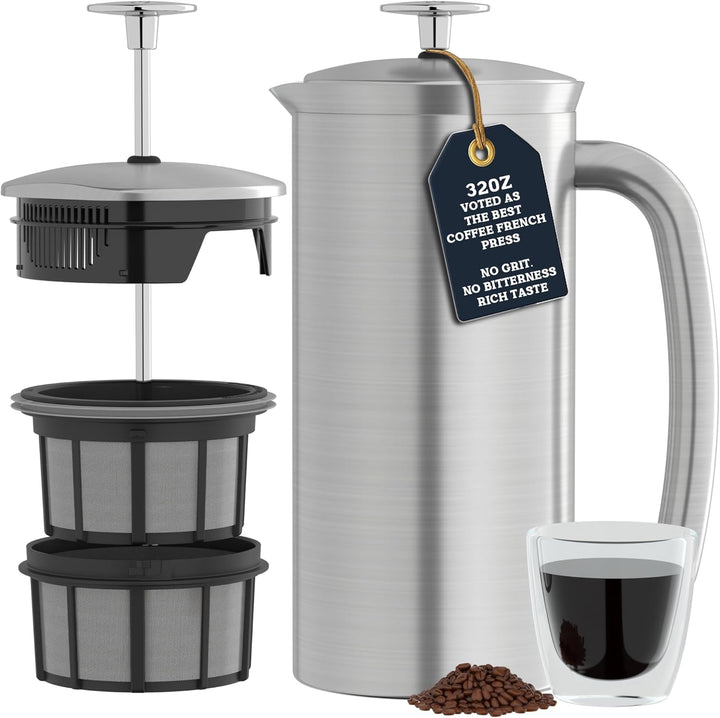
If you have ever poured a french press cup and found it gritty or muddy, the Espro P7 is the answer to that specific frustration. Espro uses a patented double micro-filter system with two stainless steel filters stacked together. This catches fine particles that a standard single-filter design lets through, giving you a cleaner, brighter cup while still preserving the full body you expect from a press.
In practice, the difference is noticeable from the first cup. The coffee pours without that heavy silt at the bottom of the mug. The brew stays cleaner longer too, because the double filter prevents continued extraction after pressing, which is a common cause of bitter, over-steeped coffee from standard presses.
Moreover, the build quality here feels genuinely premium. The stainless steel body is double-walled, keeping your brew hot for up to an hour. The plunger mechanism is smooth and firm, not the wobbly experience you get from cheaper presses.
- Dramatically less sediment than any standard single-filter press
- Prevents over-extraction after plunging
- Vacuum insulation keeps coffee genuinely hot
- Solid, premium feel in hand
- Double filter takes more effort to clean thoroughly
- Premium price point is hard to justify if you drink only occasional coffee
What We Liked
The standout here is how clean the cup actually tastes. Most french presses claim to minimize sediment, but the Espro P7 is one of the few that delivers on that promise in a way you can taste immediately. The heat retention is also a genuine benefit for slow morning routines.
What We Disliked
Worth flagging though: the double filter is more involved to disassemble and clean than a standard press. If you are someone who hand-washes everything quickly and moves on, budget a bit of extra time for the Espro.
Bodum Chambord French Press
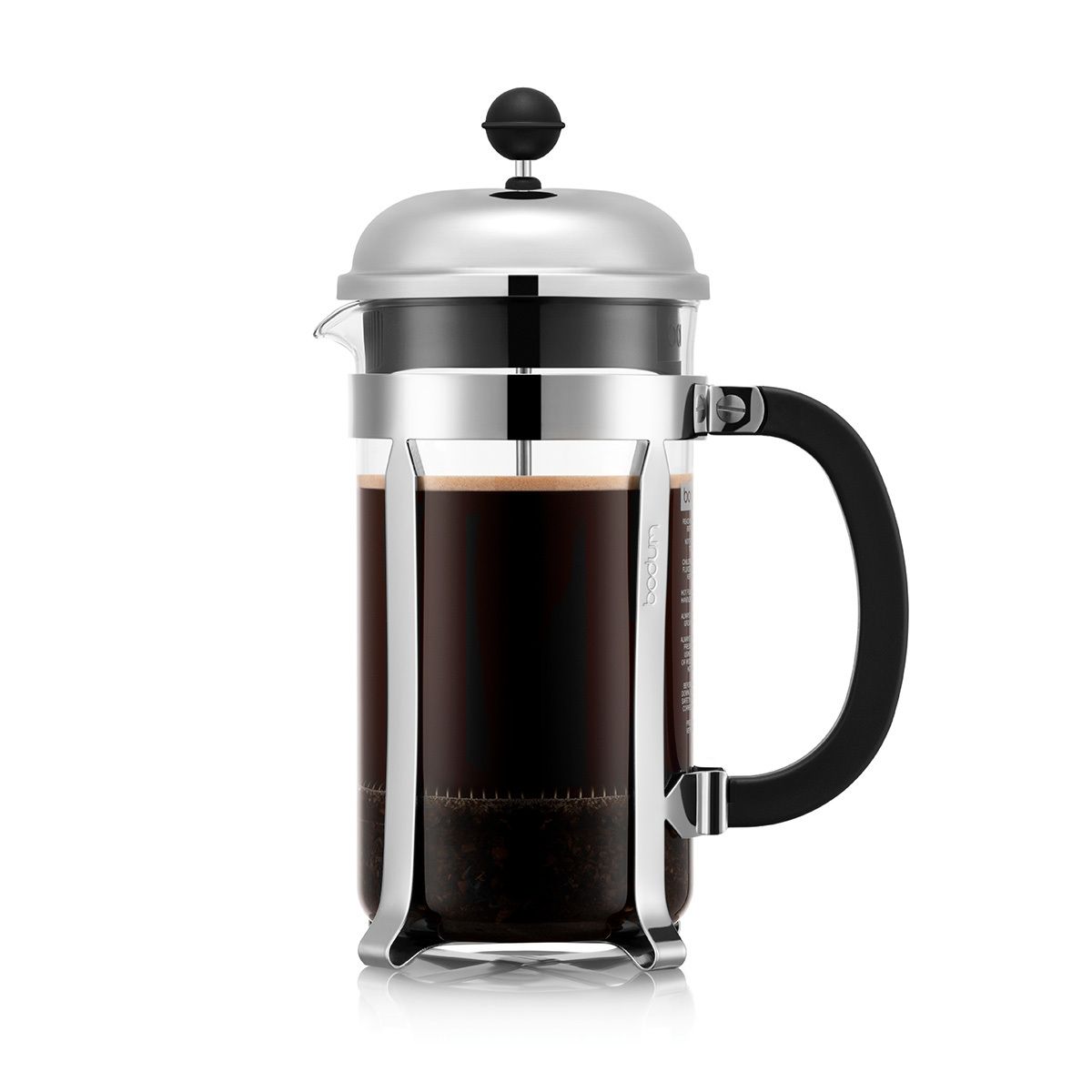
There is a reason the Bodum Chambord has been the reference point for french press design since 1974. It is the press that most coffee professionals reach for when they want a reliable, no-fuss everyday brewer. The chrome frame, heat-resistant borosilicate glass, and stainless steel plunger are essentially unchanged from the original, and that is genuinely a good thing.
The Chambord is available in a wide range of sizes, from 12 oz (3-cup) up to 51 oz (12-cup), which makes it one of the most versatile presses in terms of household fit. For a couple brewing morning coffee, the 17 oz size is ideal. For a household of four who all want a cup simultaneously, the 34 oz or larger handles it comfortably.
In addition, the borosilicate glass is heat-resistant and durable for everyday use, though it does require some care. It is not unbreakable, and that is the primary limitation of glass-bodied presses compared to stainless alternatives.
- Iconic, timeless design that looks great on any counter
- Wide size range covers solo brewers to full households
- Dishwasher-safe for easy cleanup
- Proven, consistent brewing performance
- Glass carafe is breakable and offers no heat retention
- Single mesh filter allows more sediment than premium options
What We Liked
Genuinely impressive is how consistent the brewing results are across cup after cup. The Chambord delivers what you expect from a french press every time, with no surprises. It is the press equivalent of a reliable kitchen workhorse.
What We Disliked
The honest downside is heat retention. The borosilicate glass cools quickly, so if you are a slow morning drinker or brew for a group that pours at different times, the last cup will be noticeably cooler than the first.
Bodum Brazil French Press
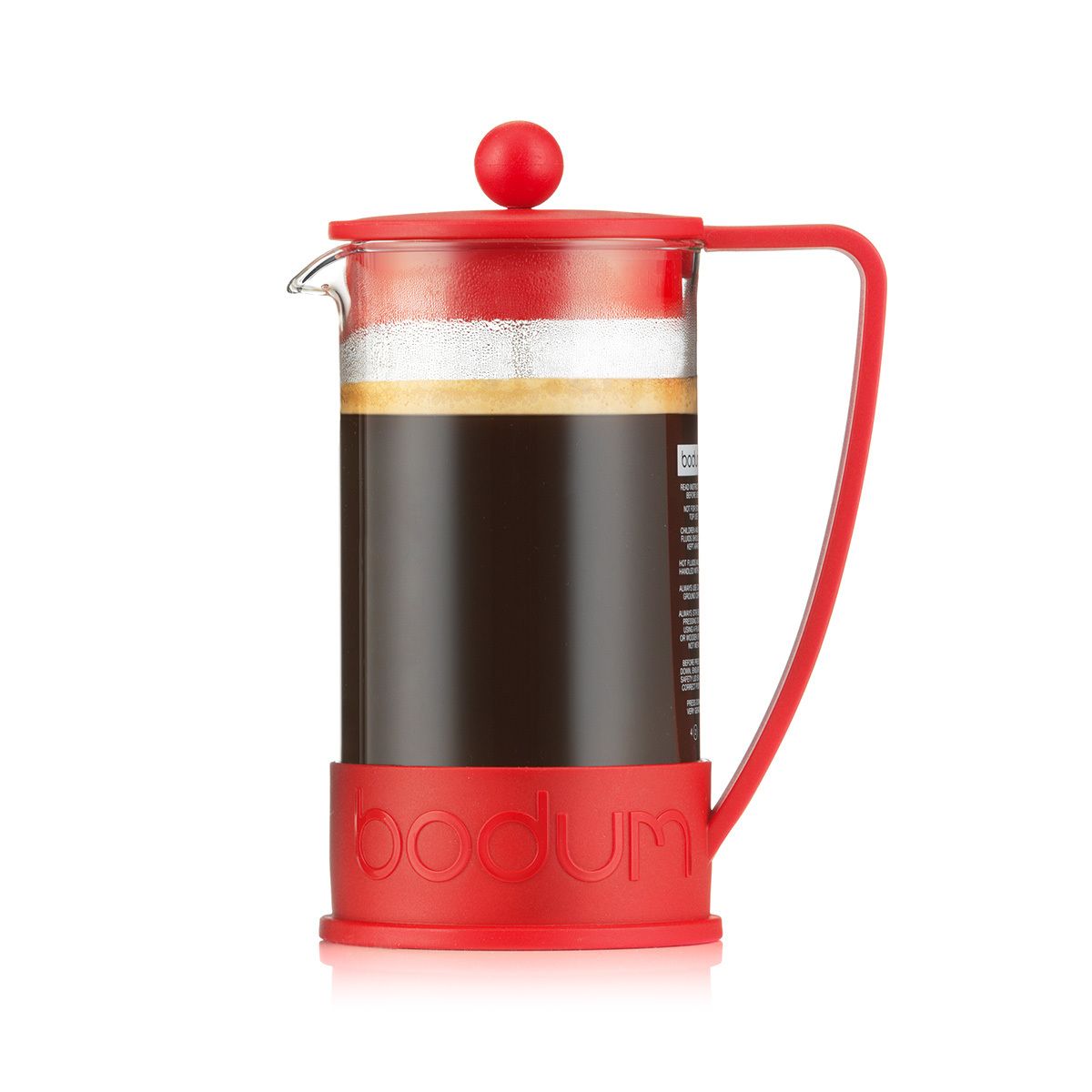
Picture this: you want to start brewing real coffee at home, you have never used a french press before, and you do not want to spend a lot to find out if you even like the method. The Bodum Brazil is exactly what you need. It delivers the same fundamental brewing experience as far more expensive presses, at a price that makes experimenting genuinely low-risk.
The Brazil shares Bodum’s core plunger and mesh filter design, just in a simpler plastic frame instead of chrome. The borosilicate glass is still there. The brewing quality is practically identical to the Chambord, which has made this one of the highest-reviewed presses in its category on Amazon.
That said, the plastic frame does feel less refined over time. It is not a deal-breaker for everyday use, but if you plan to use this daily for several years, the Chambord or an all-stainless option will outlast it.
- Most affordable entry point for genuine french press brewing
- Same borosilicate glass quality as the Chambord
- Easy for first-time french press users
- Dishwasher-safe for simple cleanup
- Plastic frame feels less durable than chrome or stainless steel
- No heat retention, glass cools quickly like all standard presses
What We Liked
Easily the best part of the Brazil is what it delivers per dollar spent. Real buyers with long-term ownership report that it brews just as well as presses costing twice as much. For a first-time buyer, that is a genuinely smart entry point.
What We Disliked
One limitation to note: the plastic frame shows wear over months of daily use. Discoloration around the handle area is a common observation from buyers who have used it for over a year.
Stanley Classic Stay-Hot French Press

Imagine waking up at a campsite, reaching into your gear bag, and pulling out a french press that kept your coffee warm for hours overnight. That is the scenario the Stanley Classic Stay-Hot French Press was built for. This is the only press on this list with double-wall stainless steel construction designed specifically for outdoor and travel use.
The 48 oz capacity brews enough for four people, which makes it practical for group camping trips, road trips, or any situation where electricity is not available. Stanley’s insulation keeps contents hot for up to four hours, which is a meaningful real-world advantage over any glass-bodied press.
However, the tradeoff is portability in a different sense. At 48 oz, this is not a small press. It is built for groups, not solo travelers. If you want a compact travel option for one or two people, the sizing here may feel like overkill.
- Genuine heat retention for outdoor and travel use
- Virtually unbreakable stainless steel body
- Large capacity serves 4 to 6 people easily
- No electricity required for brewing
- 48 oz size is too large for solo or paired daily home use
- Heavier than glass-bodied presses due to stainless construction
What We Liked
Most impressive to us is the durability. Real-world buyers with long-term outdoor use report that the Stanley handles rough conditions, including drops and temperature extremes, without issue. For camping use specifically, nothing else on this list comes close.
What We Disliked
Not ideal if you are looking for a home kitchen daily driver. The 48 oz size means you are either brewing for a group or wasting coffee. For solo home brewing, the Bodum Chambord or Espro P7 will serve you better.
Le Creuset Stoneware French Press

Some products earn a place in your kitchen by performing well. Others earn it by being beautiful enough that you actually want them sitting on your counter. The Le Creuset Stoneware French Press falls into the second category, and it delivers genuinely good coffee alongside that aesthetic appeal.
Available in Le Creuset’s signature colorways, including Flame, Marseille, and Cherry, this press is hand-crafted from the same high-fired stoneware the brand uses across its cookware line. The stoneware retains heat better than borosilicate glass, which gives it a modest practical advantage over standard glass presses.
Beyond that, it is worth being honest about who this press is for. It is a lifestyle purchase as much as a brewing tool. Buyers who want to give a thoughtful kitchen gift, or who have invested in a curated kitchen aesthetic, will find the Le Creuset fits that intention well.
- Genuinely beautiful design in iconic Le Creuset colors
- Stoneware retains heat better than standard glass
- Dishwasher-safe for practical everyday use
- Makes an exceptional kitchen gift
- Stoneware is heavy compared to glass or stainless alternatives
- Premium price is driven largely by brand and aesthetics
- Solid stoneware walls mean you cannot see the brew level inside
What We Liked
Where it delivers is in the complete package: a press that functions well and looks like it belongs in a thoughtfully designed kitchen. The heat retention advantage over glass is modest but real, and the colorways are genuinely striking in person.
What We Disliked
Where it falls short is transparency, literally. Because the stoneware is opaque, you cannot see the water level or brew color during steeping. For precise brewers who rely on visual cues, that is a daily minor frustration.
What to Know Before You Buy
Choosing between french press coffee makers comes down to four practical factors: material, capacity, filter quality, and your intended use. This section walks through each so you can match the right press to your actual lifestyle.
For more options in the broader coffee maker category, the Coffee & Espresso section on WarmPicks covers everything from espresso machines to pod brewers.
If you also use a drip machine on busy mornings, our guide to drip coffee makers compares the top-rated options for households who want both methods available.
1. What Material Should Your French Press Be?
Glass presses (Bodum Chambord, Bodum Brazil) offer the most transparent brewing experience and are typically the most affordable. The tradeoff is fragility and zero heat retention. Coffee cools in 15 to 20 minutes.
Stainless steel presses (Espro P7, Stanley) are durable and provide genuine insulation. They are the right choice for travel, outdoor use, or anyone who drinks coffee slowly over 30 to 60 minutes.
Stoneware (Le Creuset) lands between the two. More heat retention than glass, more visual appeal than stainless, but heavier and more expensive than either.
2. What Capacity Do You Actually Need?
| Household Size | Recommended Capacity | Best Match |
|---|---|---|
| 1 person | 12 oz to 17 oz | Bodum Brazil 12 oz |
| 2 people | 17 oz to 27 oz | Bodum Chambord 17 oz |
| 3 to 4 people | 34 oz | Bodum Chambord 34 oz |
| 4 or more / outdoor | 48 oz | Stanley Stay-Hot |
| Sediment-sensitive | Any | Espro P7 |
3. How Important Is Filter Quality?
Most french presses use a single stainless steel mesh filter. These work well for standard brewing, but they allow fine coffee particles into the cup. If you grind your own beans or use a fine-to-medium grind, you will notice sediment at the bottom of every cup.
The Espro P7 is the only press on this list with a double micro-filter system. If sediment bothers you, this is the most practical solution without switching brewing methods entirely.
4. Water Temperature and Brew Time
The ideal water temperature for french press brewing is 195 to 205 degrees Fahrenheit (90 to 96 degrees Celsius). Boiling water at 212°F (100°C) can over-extract and produce bitter coffee.
Steep time is typically four minutes for a standard medium-coarse grind. Longer steeping increases bitterness; shorter steeping produces weak, under-extracted coffee.
Note: Product rankings on WarmPicks are based on Amazon customer ratings, verified review counts, and value for money. All products are sourced from Amazon.com and ranked using our proprietary conversion scoring formula that weighs star ratings, social proof from verified buyers, and price-to-value ratio.
—
So which french press coffee makers should you buy?
The Espro P7 French Press is the best choice for most buyers who take their morning coffee seriously. The double micro-filter system solves the single biggest complaint about the french press method: sediment. It brews a cup that is clean, rich, and free of the grit that makes some people give up on french presses entirely. If you are investing in a daily coffee ritual, the Espro earns its premium price.
For buyers who want a reliable everyday press without the premium spend, the Bodum Chambord is the right answer. It has earned its reputation over decades of consistent performance, comes in a size for every household, and cleans up easily. It is the press most coffee lovers end up recommending to friends.
If you are just getting started with french press brewing, the Bodum Brazil removes all financial risk from the experiment. And for outdoor adventurers or households of four or more, the Stanley Classic Stay-Hot is in a category of its own for durability and heat retention.
Browse our full Coffee & Espresso category on WarmPicks for more buying guides across every coffee brewing method.
Frequently Asked Questions
What are the best french press coffee makers for everyday home use?
The best french press coffee makers for everyday home use are the Espro P7 for sediment-free brewing, the Bodum Chambord for a classic reliable option, and the Bodum Brazil for budget-first buyers. The right choice depends on how often you brew, how many people you serve, and whether sediment in your cup bothers you.
How long should you steep coffee in a french press?
Steep your coffee for four minutes as a starting point. Use coarse-ground coffee and water at 195 to 205 degrees Fahrenheit (90 to 96 degrees Celsius). Press slowly and pour immediately. Leaving coffee in contact with the grounds after pressing causes continued extraction and bitterness, which is why the Espro P7’s double filter is particularly useful.
Is a french press better than a drip coffee maker?
A french press produces a richer, fuller-bodied cup than most drip machines because no paper filter removes the natural oils from the coffee. However, drip makers are more hands-off and convenient for busy mornings. Many households own both. If you want to explore drip options alongside your french press, our guide to drip coffee makers covers the top picks.
Why is there sediment at the bottom of my french press coffee?
Sediment forms because the metal mesh filter in a standard french press cannot catch all fine coffee particles. Using a coarser grind reduces sediment significantly. The Espro P7’s double micro-filter system is the most effective solution if this is a persistent issue for you. Avoid pressing too hard or too fast, which forces finer particles through the filter.
How do you clean a french press properly?
Disassemble the plunger completely after each use. Rinse the filter sections separately to remove trapped grounds. Most Bodum models are dishwasher-safe. The Espro P7 requires more attention because the double filter has more parts. Never leave used grounds sitting in the press for hours, as they create a bitter residue that is harder to remove.
Can you use a french press for tea or cold brew?
Yes. A french press works well for loose-leaf tea, using the same steeping and pressing method. For cold brew, add coarsely ground coffee and cold water, steep in the refrigerator for 12 to 24 hours, then press. Cold brew in a french press produces a concentrate you dilute to taste. The Bodum Chambord 34 oz or 51 oz sizes are particularly practical for cold brew batches.
Is the Le Creuset French Press worth the price?
The Le Creuset Stoneware French Press is worth the price if aesthetics and brand investment matter to you, or if you are buying a premium gift. As a pure brewing tool evaluated on coffee quality alone, the Espro P7 and Bodum Chambord offer better performance-to-value ratios. The Le Creuset earns its price through craftsmanship and design, not through brewing superiority.